The Silent Clock on Law Firm Leadership
A demographic shift is now colliding with a technology shift — quietly, but unmistakably.
The partners who built the modern legal industry are nearing the end of their careers.
In the Am Law 200, about 1 in 6 partners are already at or past age 65 (Lateral Link / ALM analysis, 2024) and nearly half of firm leaders are 61–79 (Thomson Reuters Leadership Demographics Report, 2024).
Their notebooks, instincts, and unwritten strategies are still tucked inside their heads.
Yet most firms still aren’t prepared — fewer than 1 in 4 small firms list succession as a current priority (Thomson Reuters “State of Small Law Firms,” 2024).
And the real risk isn’t client churn — it’s knowledge loss.
58% of C-suite leaders are very concerned about losing institutional knowledge and 92% admit they aren’t consistently capturing it from retirees (2025 APQC Knowledge Retention Study).
Meanwhile, AI is accelerating how quickly firms can work, learn, and compete.
31% of legal professionals now personally use generative AI at work (Wolters Kluwer Future of Professionals Report 2025),
with 54% using AI for drafting and 14% for analyzing firm data (Wolters Kluwer “GenAI in Practice,” 2025).
Law firms are aging faster than they are transferring wisdom.
And in a profession built on judgment, pattern recognition, and strategy — knowledge is now the asset at risk.
Why Succession in 2025 No Longer Looks Like It Once Did
Succession used to be ceremonial — choosing the next name for the letterhead.
Today it is existential — ensuring the intelligence of the firm survives the people who hold it.
Senior partners carry decades of valuation logic, negotiation playbooks, and deal instincts that live nowhere else.
When they exit without capture, the firm does not just lose capacity — it loses judgment.
AI is accelerating the divide: firms that codify knowledge will compound it, and firms that don’t will rebuild from scratch.
Most firms will admit privately that their best strategies, templates, and heuristics live in people — not systems.
And the next generation cannot inherit what the previous generation never recorded.
AI Makes Succession System-Dependent Instead of People-Dependent
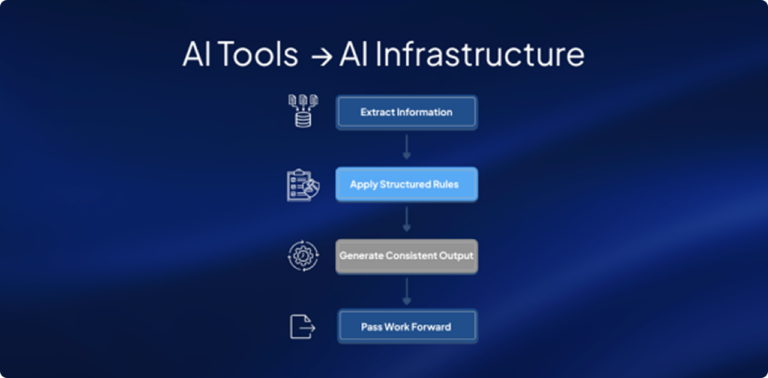
AI is not replacing senior lawyers — it is preserving them while they’re still here.
With AI-enabled knowledge infrastructure:
-
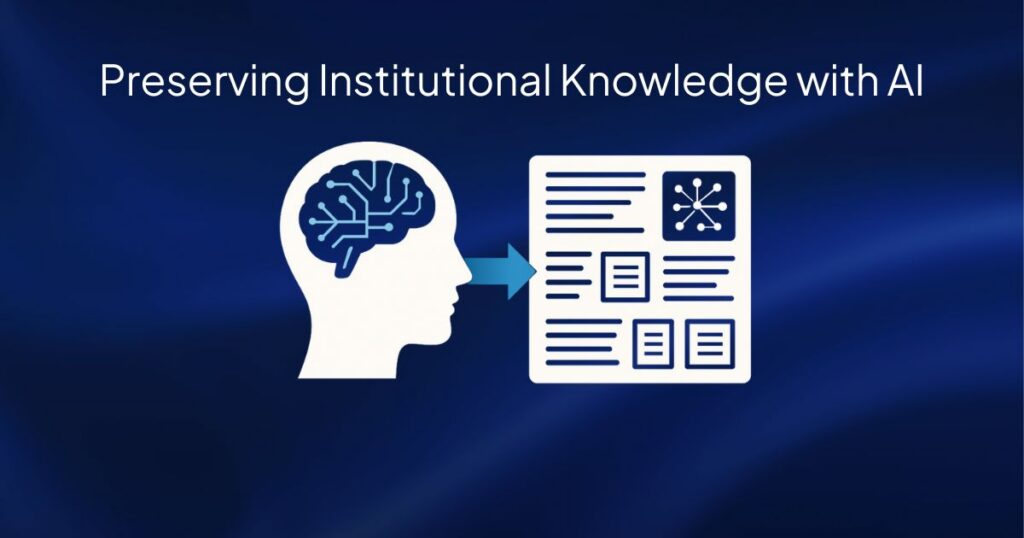
Reasoning — not just files — becomes searchable
-
Case logic and settlement playbooks convert into teachable assets
-
Onboarding for new attorneys shrinks when institutional knowledge is indexed
-
Leadership handoff shifts from improvised to controlled and repeatable
Firms using AI-backed knowledge systems retainmore client revenue during partner exits.
When knowledge lives in systems instead of people, succession stops being a cliff.
The Hidden Cost of Waiting
Doing nothing is not neutral — it compounds loss silently.
Without AI-enabled succession:
-
12–18 months of productivity drag while teams relearn what retirees already knew
-
New leaders recreate strategy instead of executing it
-
Client confidence erodes when the tone and logic of the firm suddenly shift
-
Firm valuation declines when knowledge is inseparable from individuals
When senior expertise walks out before it is captured, efficiency drops materially.
Deloitte reports that organizations without knowledge transfer see 31–37% productivity loss during senior turnover, and APQC finds that replacements operate at only 50–75% capacity for months when institutional reasoning is not documented.
Delay is expensive — and irreversible.
A 12-Month Playbook for AI-Enabled Succession
A stable transition doesn’t require three years — it requires a disciplined year.
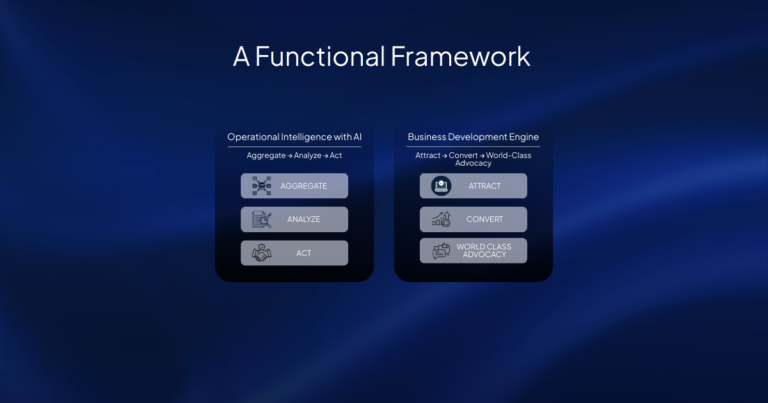
The rhythm is simple: Aggregate → Analyze → Act → Assure
Quarter 1 — AGGREGATE
Pull the intelligence out of heads, inboxes, notes, and past matters.
Aggregate what already exists before reinventing anything.
Quarter 2 — ANALYZE
Identify what is signal vs. noise.
Distill patterns, heuristics, valuation logic, and decision rules that actually drive outcomes.
Quarter 3 — ACT
Deploy the distilled intelligence inside live workflows — draft motions, demand packages, client strategy, valuation — not into static binders.
Quarter 4 — ASSURE (TRANSFER & VALIDATE)
Shadow-test successors using the system, not the person.
Identify remaining gaps and close them before titles change.
Structured, AI-assisted succession isn’t about replacing people — it’s about preserving judgement. While every firm’s context is unique, our internal modeling shows that firms who codify and activate expertise early can substantially reduce disruption and ramp-time during transitions. In today’s environment, succession strategy is no longer optional—it’s a core business continuity imperative.
The New Definition of Succession
Succession no longer means naming a successor — it means making judgment and know-how transferrable at scale.
AI is the difference between wisdom that dies with a partner and wisdom that compounds across the firm.
Platforms like FasterOutcomes make institutional knowledge durable — independent of memory, proximity, or tenure.
Firms that build AI into their succession strategy don’t just protect people — they protect legacy, revenue, and relevance.
―
Stay Ahead with AI-Driven Legal Innovation Read more insights on the FasterOutcomes Blog.- Connect with us on LinkedIn
- Follow us on Instagram
- Subscribe to our Monthly Newsletter