FasterOutcomes Thought Leadership Series: Insights from our VP of Product, Eddie Steele.
The Future of Law Is Human-Centered, AI-Powered.
At FasterOutcomes, we come in peace.
We’re not building technology to replace lawyers—we’re building it to eliminate the work that keeps them from being lawyers.
The Time Sink Problem
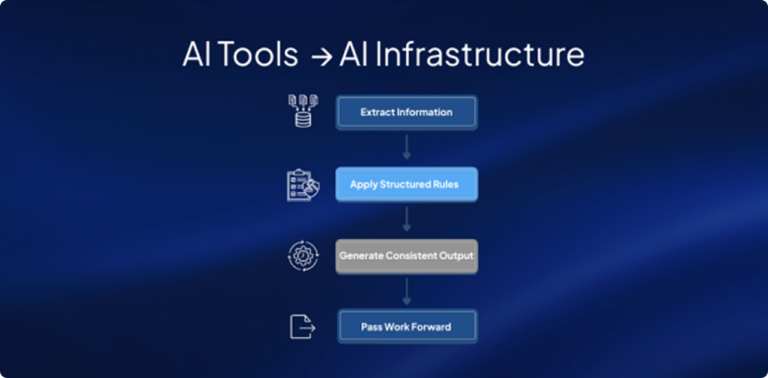
Legal teams spend substantial time on work around the practice of law: document review, deadline tracking, template recreation, and repetitive research.
No one went to law school for that. Clients don’t pay for it either. Instead, this is overhead—work that sits between lawyers and the meaningful advocacy their clients actually need.
Fortunately, AI happens to excel at exactly this kind of work. It can:
-
Organize large document sets for review
-
Extract critical dates with precision
-
Identify patterns across decades of case law
-
Catch inconsistencies humans miss
The practical gain is a faster, more consistent first pass that gives lawyers more time for strategy, advocacy, and client communication.
Where AI Stops—and Lawyers Begin
However, there’s a line AI can’t cross. It cannot recognize when a client is terrified but won’t admit it. Nor can it decide when precedent should be challenged because human stakes are too high. And it certainly can’t read the room in negotiations to sense the right moment to push harder.
How This Actually Works
The winning law firms won’t fight AI—or surrender everything to it. Instead, they’ll use it to amplify what makes them irreplaceable.
Picture this: You’re preparing for a complex negotiation. AI analyzes thousands of similar cases, identifies optimal timing strategies, and calculates probability-weighted outcomes. Yet when you’re across the table from opposing counsel, it’s you—not the algorithm—reading body language, sensing when to back off, and understanding which client objectives transcend money.
For instance, a PI attorney shared that FasterOutcomes surfaced medical-record inconsistencies he wanted to evaluate more closely. AI did not replace his judgment; it helped make sure the relevant evidence was available when he exercised it.
What Stays Human
At its core, legal work is about human problems requiring human solutions.
-
AI can flag unfavorable contract clauses. Only a lawyer understands why a client might accept those risks—because maintaining a relationship matters more than “perfect” terms.
-
AI can detect patterns in medical records suggesting an undiagnosed condition. Only a lawyer can sit down and have the sensitive, human conversation about what that means.
Critical thinking, ethical reasoning, and situational judgment remain human.
-
AI processes information. Lawyers provide wisdom.
-
AI identifies options. Lawyers make decisions.
-
AI spots patterns. Lawyers understand implications.
The Track Record
History makes the lesson clear: legal technology has never eliminated lawyers.
Typewriters didn’t. Word processors didn’t. Online databases didn’t.
Each wave of innovation freed lawyers from busywork and made their essential skills more valuable. This wave is no different—with one important twist: it might finally liberate lawyers from decades of drudge work.
Moreover, attorneys using these tools aren’t simply working fewer hours. They’re working smarter—spending more time on:
-
High-value strategy
-
Client relationships
-
Complex thinking that truly moves cases forward
Ultimately, this isn’t about replacement. It’s about transformation. This is what the legal profession was meant to be all along: human-centered, AI-powered.
That’s the future of law—and it’s already here. Curious how it works in your field? Browse our practice areas and schedule a personalized demo.
Stay Ahead with AI-Driven Legal Innovation
Read more insights on the FasterOutcomes Blog.- Connect with us on LinkedIn
- Follow us on Instagram
- Subscribe to our Monthly Newsletter