FasterOutcomes Thought Leadership Series: Insights from Our CTO, Frank Goortani
Open vs. Closed Generative AI in Enterprise: Why Hybrid is the FutureIn today’s race to harness generative AI, enterprises face a pivotal choice: open-source or proprietary AI models. Each offers distinct advantages—and limitations. But increasingly, the most forward-thinking organizations are realizing it’s not a matter of either/or. The future lies in a hybrid approach.
In this post, we’ll explore the strengths and trade-offs of open vs. closed models—and why FasterOutcomes’ hybrid AI strategy delivers unmatched results for legal and professional use cases.
The Case for Open-Source AI Models
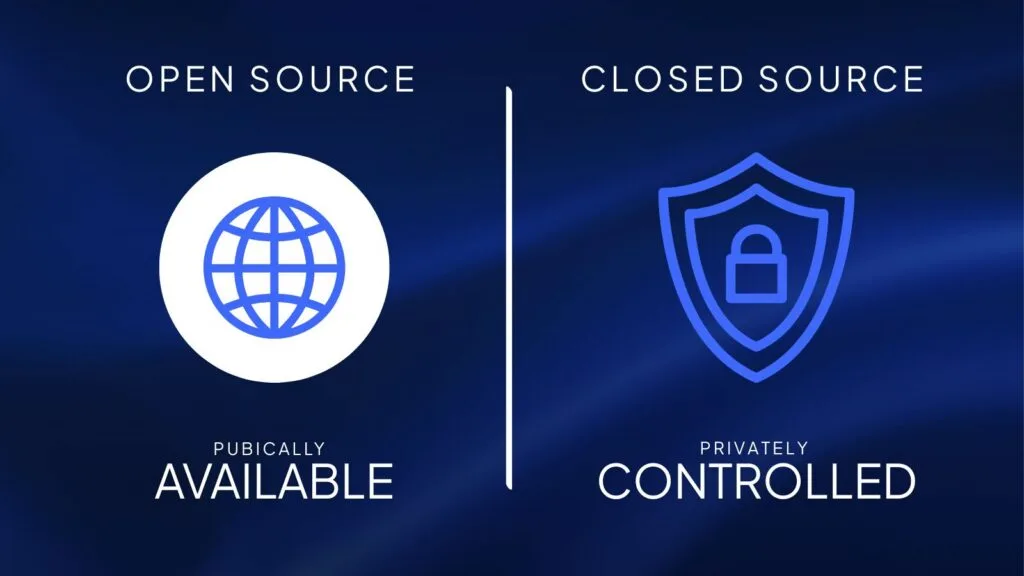
Open-source models—whose code or weights are publicly available—have surged in enterprise adoption. In fact, 89% of AI-adopting companies report using open-source AI in some capacity.
Why the enthusiasm?
-
Cost Savings: Open models cut licensing fees and API costs. Without them, organizations may spend 3.5× more to build the same capabilities.
-
Customization & Control: With full access to model weights and code, teams can fine-tune solutions for their domain—crucial for privacy-sensitive industries.
-
Community Innovation: Platforms like LLaMA benefit from rapid community-driven improvements, accelerating innovation and expanding use cases.
But there are trade-offs:
-
Technical Overhead: Self-hosted models require infrastructure and skilled engineering support.
-
Security & Support Gaps: Many models lack vendor backing, accountability, or consistent patching.
-
Performance Limitations: Some models may underperform without extensive tuning or may come with restrictive licenses.
Despite these challenges, open-source models offer unparalleled flexibility and control—making them a foundation of modern enterprise AI.
The Case for Proprietary AI Models
Closed models like GPT-4, Claude, or Gemini dominate public benchmarks and offer streamlined access via APIs.
Key advantages include:
-
Cutting-Edge Performance: Built with billion-dollar training budgets, these models excel in language generation and complex reasoning.
-
Ease of Use: Plug-and-play APIs mean faster deployments and quick time-to-value.
-
Enterprise-Grade Support: Features like SOC 2 compliance, encryption, and SLAs offer peace of mind.
But challenges remain:
-
High Costs & Lock-In: Fees can skyrocket with scale, and businesses risk vendor dependence.
-
Privacy & Compliance Risks: Sensitive data must leave your environment—often a non-starter for regulated industries.
-
Limited Customization: Proprietary models can’t be fine-tuned deeply or transparently inspected.
While closed models offer performance and convenience, they often lack the flexibility and cost-efficiency needed at scale.
Why a Hybrid AI Strategy Is the Gold Standard
Instead of choosing, leading enterprises are combining both. A hybrid approach leverages the strengths of each to create a smarter, more resilient AI architecture.
Benefits include:
-
Best of Both Worlds: Use open models for secure, domain-specific tasks; proprietary ones for complex general reasoning.
-
Cost Efficiency: Model selection can balance capability, latency, and cost for each workflow instead of sending every task to the same model.
-
Deployment Control: Some workflows can use private or self-hosted models when the deployment and data requirements call for them.
-
Flexibility: Easily adapt to new models or regulations without being locked into a single ecosystem.
-
Layered Review: Different models or deterministic checks can support drafting and verification, with a professional reviewing the result before use.
FasterOutcomes’ Hybrid Approach: Built for Legal & Professional Domains
FasterOutcomes can combine open and proprietary models with domain-specific instructions, approved knowledge sources, and review standards. The configuration depends on the workflow, customer requirements, and current model capabilities.
How we deliver better outcomes:
-
Domain Context: Workflows use your approved terminology, source material, and operating standards rather than relying on a generic prompt alone.
-
Task-Aware Model Selection: Workflows can use the model and controls suited to a task’s complexity, speed, and data requirements.
-
Layered Checks: Extraction, drafting, and verification can use different tools, with source citations and human review supporting quality control.
Client benefits include:
-
More Relevant Output: Responses can use customer-approved sources and terminology, giving reviewers a clearer basis for validation.
-
Reviewable Work: Guardrails, source citations, and review steps help teams identify unsupported or unsuitable output before relying on it.
-
Cost Control: Teams can reserve more capable, higher-cost models for the tasks that need them.
-
Faster Iteration: Teams can update prompts, approved sources, and review standards without retraining a proprietary model.
-
Dedicated Support: You get transparency, hands-on assistance, and AI aligned with your goals.
Final Thoughts: Don’t Settle for Generic AI
The future of AI isn’t about choosing sides. It’s about choosing smart architecture. A hybrid AI strategy brings together power, control, and agility—tailored to your domain.
FasterOutcomes helps legal and elective medicine teams turn approved sources and professional methods into reviewable workflows that fit the systems they already use.
See how that approach fits your workflow.
Book a tailored demo.
Sources:
Open Source AI: Cost-Effective and Widely Used, Says Meta-Backed Report
Open Source in the Age of AI – McKinsey & Company
Compare Proprietary vs. Open Source for Enterprise AI – TechTarget
New Enterprise Edition of ChatGPT Promises Total AI Data Security & Control – RCR Wireless
How to Slash LLM Costs by 80%: A Guide for 2025 – LinkedIn
Is ChatGPT Safe for Business? 8 Security Risks & Compliance Guide 2025 – Metomic
This ChatGPT-Inspired Large Language Model Speaks Fluent Finance – Johns Hopkins University Hub
Does Fine-Tuning Make a Difference in the Reliability of Language Models? – Legaltech Hub