If you own a law firm, you’ve probably heard two very different stories about AI.
In one, robots are coming for your associates, your paralegals, and possibly your parking spot. In the other, AI is the reckless intern that invents case law and gets attorneys sanctioned.
Neither story reflects how AI can support the day-to-day operations of a law firm. The truth is far less dramatic and a lot more encouraging: AI can take a meaningful amount of work off your team’s plate, as long as you understand what it’s good at, where it falls short, and how to use it responsibly.
This article is the first of many on how AI can help law firm owners make more money, save time (and their sanity), and elevate their firm’s reputation. Let’s start with the basics.
How Can AI Help a Law Firm?
AI can help law firms draft documents, summarize case materials, organize information, improve client communication, standardize repetitive workflow tasks and reduce administrative work to support more consistent legal operations. It can even suggest strategy and provide factual data to support that recommendation, but it cannot replace attorney judgment, guarantee accuracy, or assume responsibility for legal decisions.
Think about how a typical matter moves through your firm. There’s intake, document gathering, summarizing, drafting, revising, client updates, deadline tracking, and a long list of administrative steps. Only a portion of that requires an attorney’s expertise. The rest is necessary, time-consuming, and often repetitive.
The “rest” is where AI earns its keep. Think of it as the colleague who never sighs at another mountain of paperwork or the fifteenth redline.
What Tasks Can AI Handle in a Law Firm?
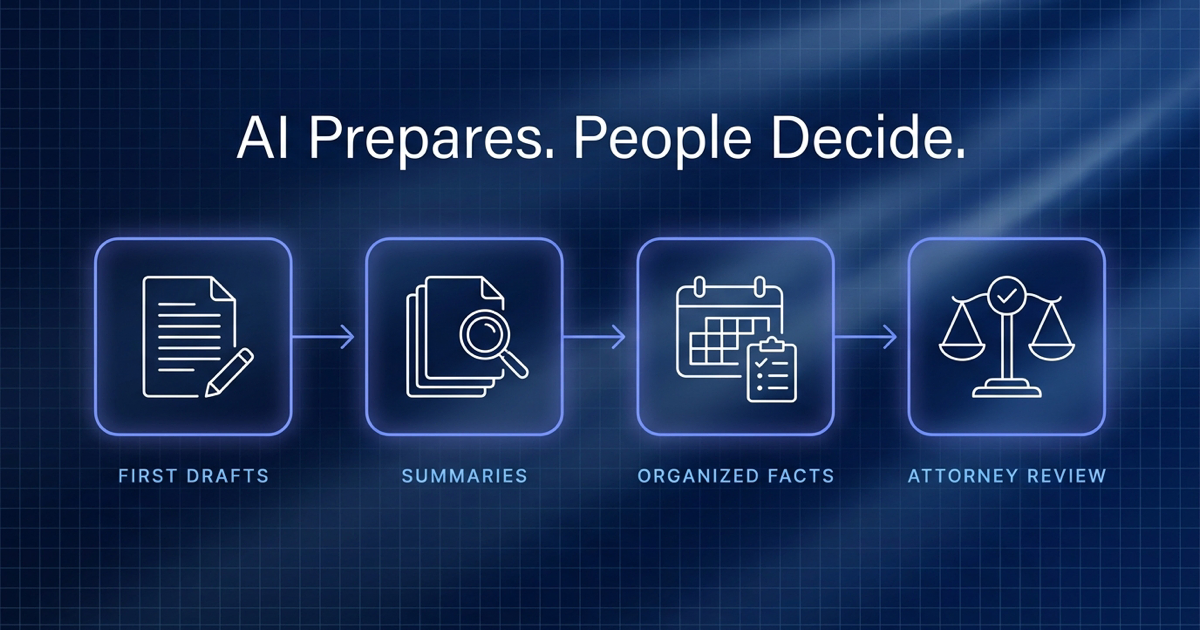
Creating first drafts. AI can produce a useful starting point for letters, emails, client updates, internal memos, and many routine documents in seconds. Your team edits, verifies, and refines instead of starting with a blank page.
Summarizing large volumes of information. Discovery documents, deposition transcripts, medical records, and long email threads can be condensed into organized summaries. Your team still verifies the details, but they start from an overview rather than page one. Tools such as Saxon™ Pro & Discover help legal teams analyze matter files and trace findings back to supporting documents.
Organizing and extracting information. AI can identify key facts, dates, names, and figures in documents and put them into a usable format. This is especially valuable during intake and early case development, provided the extracted information is checked against the original record.
Supporting client communication. Clients want to know what’s happening with their matter. AI can help your team draft clear, timely, plain-language updates, so clients feel informed without your staff writing every message from scratch.
Improving consistency. When everyone on your team approaches a task a little differently, quality varies. AI can support standardized workflows, helping your team follow the same procedures and review points from one matter to the next.
That last capability is especially important. Creating a document faster is useful. Helping an entire firm execute its work more consistently through the use of systems is where AI begins to change how the business operates, and how it can scale profitably.
What Can’t AI Do for Lawyers?
It doesn’t replace judgment. AI can identify information and suggest language and legal strategy, but it can’t understand every nuance of a client’s circumstances, or assume responsibility for a legal decision. That’s your team’s job, and it should stay that way. AI can draft the letter. It can’t tell when a client needs a phone call instead.
It doesn’t know your client the way you do. AI works with the information and context available to it. The history, relationships, experience, and nuance your team brings to a matter still matter enormously.
It isn’t automatically accurate. AI can make mistakes, and it can state them confidently. Every consequential output needs appropriate human verification. That’s why in Saxon™, all statements are backed by an inline citation and a clickable link to easily view the source document. The firms that run into trouble are often the ones that rely on AI-generated information without adequately checking it.
It doesn’t take responsibility. Your firm remains accountable for its work, regardless of the tools used to produce it. The American Bar Association addressed this in Formal Opinion 512 (2024), explaining how lawyers’ existing obligations—including competence, confidentiality, communication, supervision, and accuracy—apply when using generative AI.
The goal isn’t to remove people from the process. It’s to give them better tools to do their jobs.
Two Common Myths About Legal AI
In working with law firms, two beliefs come up again and again that keep owners from getting real value from AI.
Myth #1: “AI is just a smarter chatbot.”
Plenty of firms start by pasting text into a general chat tool for one-off tasks. That’s a bit like buying a race car and idling it in the driveway.
The real gains come when AI becomes part of how your firm works—not just generating an answer, but supporting the steps that move a matter forward.
Imagine a new case coming in. Instead of repeatedly gathering, organizing, analyzing, and reentering the same information, your team follows a defined process that carries the matter from intake through resolution.
That’s the thinking behind AI-powered legal workflows and Playbooks: repeatable processes that apply your firm’s standards, organize information, and prepare work for attorney review.
The difference isn’t just faster tasks. It’s a more consistent way to run your firm.
Myth #2: “It has to be perfect before we use it.”
AI doesn’t need to be perfect to be valuable. Even an imperfect first draft can save time when reviewing and correcting it takes less effort than creating it from scratch.
But that doesn’t mean accepting mistakes. It means choosing appropriate tasks, measuring the results, and building review into the process.
That’s not a flaw in the process. That is the process.
How Should Law Firms Start Using AI?
If you’re curious but not sure how to begin, here’s a simple approach.
1. Know how your matters move. Be clear on the phases and tasks for each type of matter you handle, and where your firm does things its own way. That workflow becomes the foundation AI works from.
2. Measure before you change anything. Track how long key tasks take today. Without a baseline, you won’t be able to see the improvement, evaluate the cost of implementation, or explain the results to your team.
3. Keep a human in the loop. Build appropriate review and approval into the workflow from day one. AI prepares the work; qualified people verify it and make the decisions.
4. Protect client data first. Before putting confidential client information into an AI platform, understand how that information will be stored, processed, accessed, and protected. Review the provider’s security controls, confidentiality commitments, data retention practices, and any applicable regulatory requirements.
SOC 2 Type II audit reports, encryption, access controls, and appropriate contractual safeguards can help inform your evaluation. If protected health information is involved, determine whether HIPAA applies to your firm’s particular activities and whether additional safeguards or agreements are required.
And don’t assume removing a client’s name makes information safe to share. Context and identifying details can still reveal confidential information.
5. Choose a platform built to execute, not just chat. That’s why we built Saxon™ as a Legal Execution System™, not simply another AI chatbot.
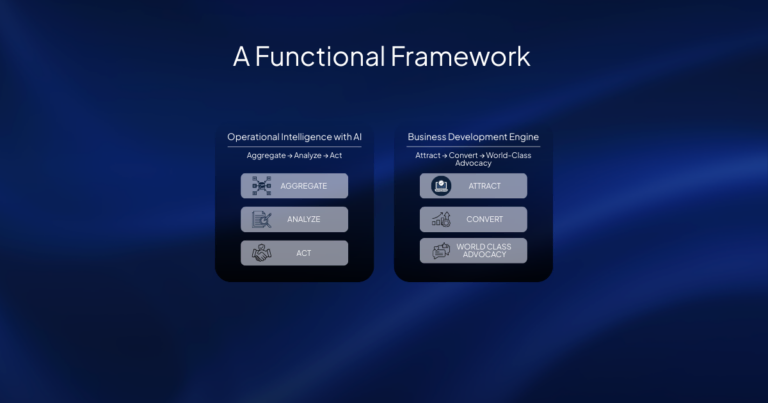
Saxon™ helps legal teams work from the case record, organize information, prepare source-linked work, and move matters through defined stages. Its Playbooks apply repeatable legal workflows and can be configured around a firm’s own processes, templates, and standards.
FasterOutcomes publishes its security and privacy commitments—including SOC 2 Type II, HIPAA compliance, and encryption in transit and at rest—in its Trust Center, where firms can also request supporting audit documentation.
The goal is to help your team follow your firm’s procedures consistently, from one phase of a matter to the next, while keeping legal judgment and final approval in the hands of the professionals responsible for the work.
What’s Next in Our Legal AI Series?
Coming up, we’ll show you how AI can help your firm:
- Make More Money: Grow capacity without growing headcount, scale without the chaos, and improve profitability through more efficient operations and thoughtful billing models.
- Save Time & Your Sanity: Step away with confidence, build a team that can cover more of the workload, and give your best people more time for work that matters.
- Elevate Your Reputation: Reduce the risk of things falling through the cracks, make consistency the default, and deliver the kind of responsive, reliable service clients remember.
Each article will give you practical ideas you can use to explore AI adoption in your own firm.
We’ll also introduce our companion series, AI for OI, focused on the Operational Intelligence law firms need to adopt AI responsibly—from protecting client information and evaluating platforms to understanding where human judgment belongs. Written by a Chief Operating Officer who has helped over a thousand law firm owners develop systems that allow them to scale profitably.
The Bottom Line: AI Supports Lawyers, It Doesn’t Replace Them
AI isn’t coming for your firm. It’s coming to your firm, and the owners who learn how to use it thoughtfully will be better positioned to compete.
The goal was never to replace the people who make your firm work. It’s to give them back the time, energy, and evenings they’ve been sacrificing to get the work done.