The first place I’d look is the work already on your team’s desk.
In my work as a fractional COO for law firms, I’ve learned that when a firm leaks profit, the usual suspect is unrecorded billable time. But there’s another costly problem that’s easier to miss. I call it the legal production logjam.
I’ve watched legal teams get maxed out while the owner struggles to find the right attorney or paralegal. Work slows down. Clients wait longer for answers. Good prospects get turned away because the team can barely keep up with the work it already has. I’ve seen it happen more times than I can count.
So how can your law firm grow without hiring right away? Start by finding the recurring work that slows your team down. AI can help with steps like organizing records, pulling out key facts, and preparing first drafts. If those steps take less time, including the time your team spends reviewing the work, you may have room to serve more clients while you look for the right hire.
The Hiring Trap
For most firms I’ve worked with, the growth formula has always been simple. More matters require more people.
But that formula has some painful side effects.
- Great talent is hard to find. Experienced attorneys and seasoned paralegals don’t sit around waiting for your job post. The people you want are often busy and happy somewhere else. Even when you find someone qualified, you still need to figure out if they’re a good fit for your firm.
- Hiring takes an upfront investment. You can spend weeks interviewing and onboarding someone before you know how well the fit will hold up.
- Ramp-up takes time. Even a strong hire needs to learn your firm’s way of doing things. Meanwhile, someone on your team is spending hours training them that they’d usually spend moving work forward.
- Payroll comes before revenue. The salary starts on day one. It may take months for the additional work to turn into collected revenue.
I’ve watched owners get stuck here. Hire early and feel the pressure on cash flow. Wait too long and risk burning out the team you already have.
Where Does Your Legal Team’s Time Go?
Think about what fills a typical day for your attorneys and staff.
- Reviewing and summarizing documents
- Organizing records and pulling out key facts
- Preparing first drafts of routine letters and updates
- Tracking down what’s been done and what’s next
- Re-explaining how a recurring task is supposed to be handled
This work matters. And some of it, especially document review and drafting, calls for legal judgment. The opportunity is in the repeatable steps that get your team ready to exercise that judgment. If an attorney spends the first hour of a review sorting records and finding dates, ask how much of that preparation could be done before the file reaches their desk.
If you’re still figuring out which tasks AI can help with, start with What AI Actually Does in a Law Firm (and What It Doesn’t). It walks through where AI can save your team time and where your attorneys’ judgment comes in.
What Changes When Your Firm Has More Capacity?
You may be able to move existing work forward, accept more of the right matters, and give clients faster updates. And when you do hire, you have more room to be deliberate about the role. Maybe what you really need is an attorney who can own client relationships and case strategy. That’s easier to see once you know how much of the team’s workload is tied up in routine production.
The financial upside depends on your fee model and what you do with the time you recover. If you bill hourly, look at whether those hours can go toward other billable client work. If you charge flat fees, look at what it costs your team to deliver the work and whether you have room to take on more at a sustainable pace.
How Does AI Workflow Automation Work in a Law Firm?
In my experience, the bigger opportunity comes when you build AI into the way work moves through your firm. A first draft is helpful. A repeatable process that tells your team what gets prepared, who reviews it, and what happens next can help across an entire caseload.
That’s why we built Saxon™ as a Legal Execution System™. With FasterOutcomes Playbooks™, firms can start with a defined workflow or customize one around their own processes and templates. Depending on the Playbook, Saxon can organize records, flag possible gaps, and prepare work your team can check against the source documents. Your attorneys review the work and make the calls that require their expertise.
Build that review into the workflow from the start, along with safeguards for confidential information. The ABA’s Formal Opinion 512 on generative AI discusses both responsibilities, along with how AI use can affect fees.
How Much Capacity Could Your Firm Recover?
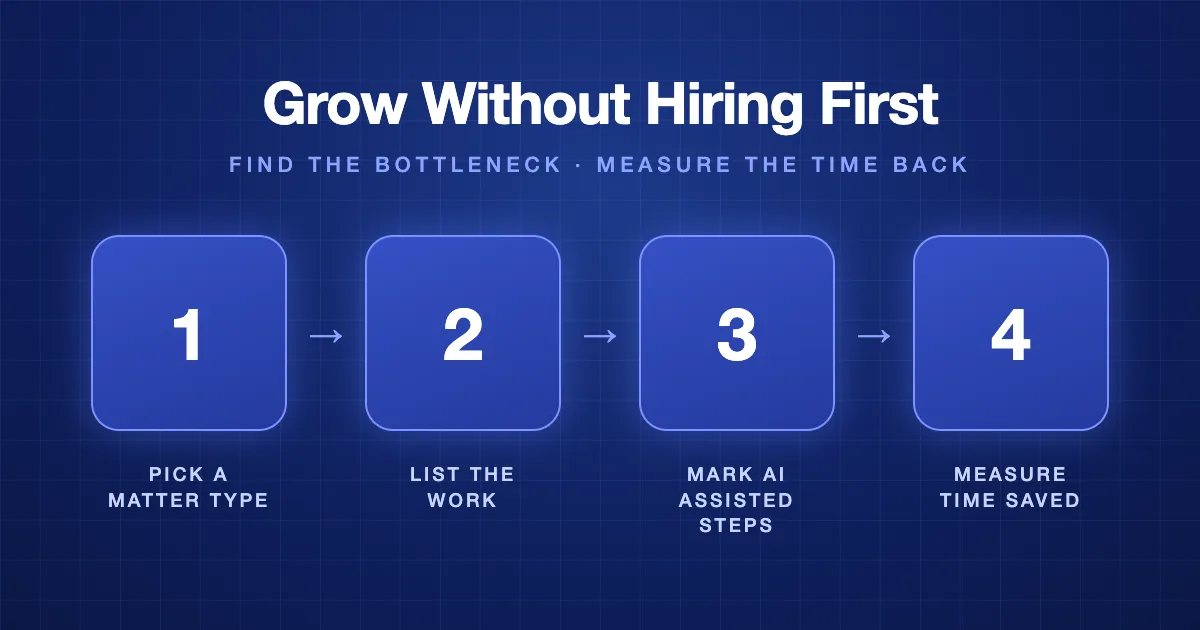
You don’t need a consultant to see the opportunity. Take it from someone who’s been one.
- Pick a common matter type. Choose one your team handles often enough that a small improvement could add up.
- List the work in each phase. From intake to closure, identify where someone is waiting on a summary, a draft, or a handoff.
- Mark the steps AI could help prepare. Start with one repeatable task, like putting records in order or pulling dates into a draft chronology. Decide who will verify the work.
- Measure the time before and after. Use a small sample. Include the time it takes to prepare inputs, check the output, and correct it.
- Multiply the net time saved by the number of times your team does that task each month. Then look at who gets that time back and whether it’s enough to relieve the bottleneck you started with.
What Does That Look Like in Practice?
Say your team prepares 20 chronologies a month. Each one takes 90 minutes today. If an AI-assisted workflow brings that down to 60 minutes, including review and corrections, you’ve freed up 10 team hours a month. Now you can decide where those hours would make the biggest difference. That might be clearing a backlog, getting client updates out on time, or taking on additional work.
The Bottom Line
I won’t sugarcoat it. Finding the right attorney or paralegal can feel like you’re searching for a unicorn. In the meantime, look at what keeps the people you already have from moving work forward. Clear one bottleneck, measure what changed, and use what you learn to decide when to hire and what you need that person to do.
You built this firm. You deserve to enjoy growing it.